

Short Overview of Macau and How It Became the Las Vegas of Asia
Located on China’s southeast coast, Macau serves as a special administrative region of the country. Macau, Asia’s premier gambling hub, is a fascinating mix of Chinese and Portuguese architecture. Most tourists agree that it is a beautiful city with good roads, parks, and magnificent hilly scenery that is ideal for both tourism and residential use. It has a plethora of natural beauty, fresh air, and a wide variety of delectable cuisine to offer. A Chinese version of Las Vegas, it is a popular tourist destination in the country.
The history of the land is a source of pride for the people of the region. It is still the only site in China where gaming is legal and permitted. According to the International Monetary Fund (IMF), the country’s GDP is $53.9 billion in nominal terms because of its strong dependence on gambling, gaming, and tourism. Surprisingly, it earns more revenue than Las Vegas, with a yearly income of $37 billion in 2018, according to figures.
How It Became Asia’s Las Vegas
According to the International Monetary Fund (IMF), the gambling industry in Macau contributes around 40% of the local GDP. Macau’s name comes from the residents’ reverence for the mythical sea goddess Mazu, who was worshipped at the nearby A-Ma Temple. According to folklore, one of the Portuguese captains enquired a fisherman about the island’s name when he first arrived on the island in the 16th century.
The man responded with the term “Magao,” which is the name of the A-Ma Temple in front of them, misreading the officer’s meaning. Macau did not become a significant settlement until the advent of the Portuguese in the 16th century. In 1513, explorer Jorge Lázaro became the first European to set foot on Chinese soil after sailing into the country. The first trading post in the Hong Kong seas was established in the 16th century at Tamao (present-day Tuen Mun), establishing frequent trade with nearby towns in southern China. Ming and Portuguese ships engaged in naval battles following the expulsion of Tamao traders from China in 1521. It wasn’t until the Pearl River Estuary was settled by Portuguese merchants that they were able to establish themselves in Macau.
The unique administrative status of Macau, which dates back to 1999, means that it is subject to different rules than the rest of China. Because it is the only part of Greater China where gambling is legal, this region (which includes the Chinese mainland, Hong Kong, and Macau) is home to China’s sole gambling destination.
A tense environment prevailed in Macau in the years running up to the handover in 1999, as organized crime fought for control of the subcontracted VIP gambling areas. Macau’s GDP grew by double digits every year between 2002 and 2014, making it one of the world’s wealthiest economies per capita. Macau’s success can also be attributed to the presence of VIP rooms, where high-stakes games can be played in privacy. They set Macau apart from other casino resorts across the world with their unique take on gambling.
Fascinating Facts About Macau
- Macau is a household name when it comes to gambling. It’s a haven for lovers of casinos and good means to have maximum fun. Its economy is mostly centered on wagering, which is an interesting reality. The 83rd largest economy in the world derives 60% of its revenue from gambling. China and other countries are the main sources of visitors to the city.
- There are four major gambling towns in the world, and Macau is one of them because of its 400-year history as a Portuguese colony. It is a popular destination for tourists because of its Portuguese architecture, islands, museums, fortresses, and magnificent casinos on par with Las Vegas and wonderful food.
- In spite of its tiny size, Macau is home to numerous sports and leisure facilities that have hosted numerous international athletic events. The Macau Grand Prix, one of the most important yearly motorsports championships that take place on city streets, is held on a regular basis throughout the region. For the first time, Formula Three, touring cars, and motorcycles all compete on the same street track. Despite having its own National Olympic Committee, the area does not participate in the Olympic Games. In addition to horse and greyhound racing, Macau also hosts a Grand Prix race in October every year.
- In any casino, blackjack is the most popular game, but in the city, things are a little different. This is a baccarat-centric establishment. Gambling is viewed as a serious activity in China, and it is not done for fun. You wouldn’t be surprised if you come across someone who was so committed to it. Such gamblers have a plethora of choices in this city. On the open floors, there is a lot of action, but the VIP rooms are where most of it takes place.
Conclusion
The modernism of Macau is rooted in China’s growth and the wealth of its people. It is critical to the long-term prosperity of Macau that it be able to draw in a large number of tourists and gamblers. For years to come, China’s middle class is expected to provide a constant supply. If you’re a gambler, Macau is the place to be. There is a lot of gaming activity in the region. All of your gambling needs will be met here, from high-rise casinos to scorching slot machines. Macau attracts some of the world’s top gamblers.
Read More → Recently, the exchange of cryptocurrency in the Philippines has been legalised. This opens new opportunities for gamblers to manage their funds at their favourite online casino sites. If you remember, I’ve covered the subject of gambling in the Philippines before and mentioned that the country is quite open-minded when it comes to people placing bets and wagers. This paved the way for Bitcoin casino sites to become very popular and desirable.
  2017 is a huge year for the casino industry in Asia, since Japan – one of the most conservative countries in the East when it comes to betting money on games – has
  Don’t believe me? Well, the overlap between these cultures goes so deep that some types of games that have existed for years in Japan are basically gambling under a different name! One example of this is gacha games, which are mobile titles with a very high amount of random number generator. In a Western mobile game, you might be paying for extra lives or specific characters, but in a Japanese gacha game you often have no choice in the matter and need to spend money to buy packs of random characters – you might get a couple of really good ones, or they might all be useless. Even more blatant is the pachinko scheme that many places in Japan are running.
  Gambling, as you may be well aware, is banned in most regions in Asia – or at the very least heavily restricted, with only a very limited selection of activities (ex. a few types of sports betting or government-sponsored lotto) being available to the public. The Philippines, on the other hand, despite being located near some very gambling-conservative countries such as Vietnam (which,
  Slots are amazingly popular worldwide. It doesn’t really take a genius to figure this much out – really, all you need to do is visit any online gambling site and see just how many online slots there are available, especially in comparison to all the other games. Hell, you don’t even need to actually sign up to any online casino – a look at
 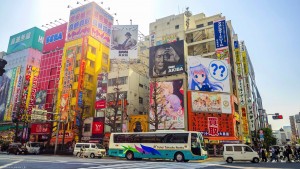 So, you’ve been thinking about visiting the capital of Japan? That’s awesome! Tokyo is one of the coolest cities around, filled with highly technological marvels and sporting an amazing infrastructure. No matter what you want to do, I can assure you that Tokyo has what you’re looking for! If you want to indulge in a bit of history, then there’s plenty of temples, shrines and castles to contrast the otherwise highly technological city. There’s also lots of markets and other tourist attractions, so it’s a pretty safe bet to say that Tokyo is just one of those cities which has everything for everyone.
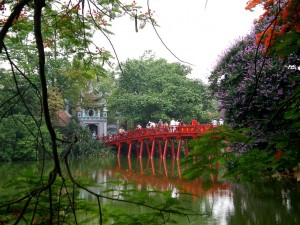 Hanoi is truly one of the richest, most unique cities in all of Asia, and it absolutely deserves the first spot on our list… even if we’re not going in any particular order. Hanoi is home to so many amazing things that we’d have to spend the entire article going into them in detail! We can’t, of course, neglect to mention the famous Hanoi Opera house, or the Perfume Pagoda, which are two of the most famous buildings in all of Vietnam. And we can’t really mention Hanoi without bringing up the Imperial Citadel of Thang Long, which is one of the most impressive castles that are still standing to this day. And if instead you’re looking to spend some time among nature, you’re going to be rather pleasantly surprised by the Ba Vi national park, which is downright STUNNING! I haven’t been there personally, but just looking at the photos makes me want to live there, and that’s saying something! Hanoi has a little bit of everything for everyone, which makes it a prime destination for tourism! Don’t miss it!
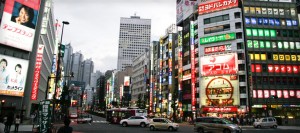 Tokyo is, by far, one of my favorite cities not just in Asia, but in all of the world. If you can handle the business of its streets, you’re definitely going to find plenty to love here! Then again, the business are part of the charm. I can guarantee that without them, the world-famous Shibuya Crossing and the surrounding Shibuya district, which were the setting of the popular videogame “The World Ends With You”, wouldn’t have been nearly as memorable or interesting! Speaking of videogames, if you’re a fan of them and other geeky things, then Akihabara is pretty much your mecca. Also known as the nerd district, Akihabara hold hundreds of stores selling anything from old videogames to large pillowcases with anime girls on them that geeks affectionately refer to as “waifus”. But just because Tokyo is incredibly urban doesn’t mean that it’s devoid of nature! Yoyogi Park and the Shinjuku Gyoen National Garden are two of the most famous nature parks in Asia, with the latter being an absolute wonderland in spring (when the sakura trees blossom with their distinctive pink petals). As for history, you’ve always got the Meiji Shrine, where you can go and make a wish regardless of your religion, or lack thereof. So if you’re looking for an exciting city adventure for you and your waifu, there is literally no better place than Tokyo!
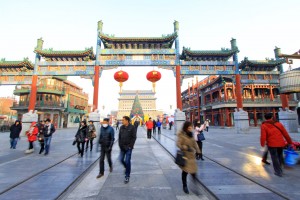 No list of the top tourist destinations of Asia would possibly be complete without mentioning Beijing! While China has had its fair share of controversy over the last couple of years (understatement of the decade), that has done very little to detract from the natural beauty and appeal from the city. For those of you who are interested in history, Beijing has not one, but two castles – the Forbidden City, which is absolutely amazing on so many levels and, thanks to how well it has been preserved and the museum exhibit filling its hallways, gives a true sense of what was like for the various families occupying it for over five hundred years; and the Summer Palace, which… Just look it up and see for yourself, no words can describe that colorful beauty! Of course, we also have to mention the historic Tiananmen Square where in 1989 a single, unarmed man stood in front of the tanks coming to suppress a protest, as depicted in one of the most famous photographs in the world. Speaking of historic locations, another place you can visit is a little thing you may have heard of called the Great Wall of China? I dunno, doesn’t ring any bells, so let’s just move on. If it’s nature you want, then nature you shall receive, courtesy of the Beihai Park and the Beijing Zoo! Now, I have to be honest – Beijing is not a perfect city, not in the slightest. But according to many, myself included, the benefits of visiting it vastly outweigh the negatives, so if you’re looking for an adventure, you can’t go wrong here!
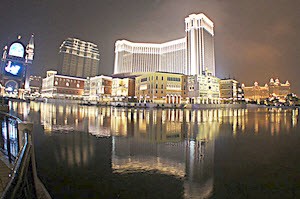 Macau is Asia’s gambling capital, there are no two ways about it, which is why it has earned itself the name “the Monte Carlo of the Orient”. There are 33 land-based casinos, of which
 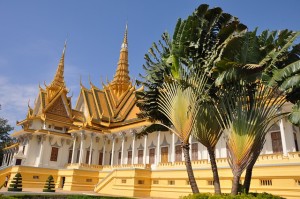 I decided to do my usual stuff this New Year again and visited the capital of Cambodia for a spin on the roulette tables. I stayed a week at the NagaWorld and the word I can use to describe it is “awesome”. I rented a Club Suite as I’m used to and really enjoyed it. The wing where my room was situated faced the river, and I could see it from my balcony. Despite my rich experience in casino resorts in Asia, this was my first time in the Mekong territory.
 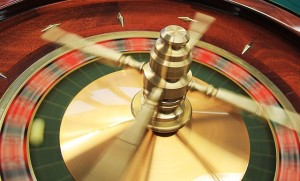 Hi, guys, and welcome to my first blog. Ever since I was allowed to visit them, I’ve been a big fan of land-based casinos and recently I became also a fan of online casinos as well. Gambling has long tradition in my family, so I was always fascinated by it and loved to take my chances playing different casino games. Considering my vast knowledge and experience, I decided that I’m finally advanced enough when it comes to games of chance so that I can give advice to other players and write reviews of different casinos and casino games. Here, I plan on sharing all the things that I’ve learned throughout the years I’ve been playing, this way hopefully helping at least a part of the new players.